

Strangely gurgling sounds come from a seminar room. It sounds as if someone is trying to say something under threat to his life. However, the understandable articulation does not seem to succeed. Again and again the eerie hustle and bustle begins, the secret listener stops curiously. "Thank you, that's enough, now take the cork out of your mouth again" , a loud, clear voice suddenly sounds. A quick glance at the sign next to the door provides clarity: This is where speaking is trained!
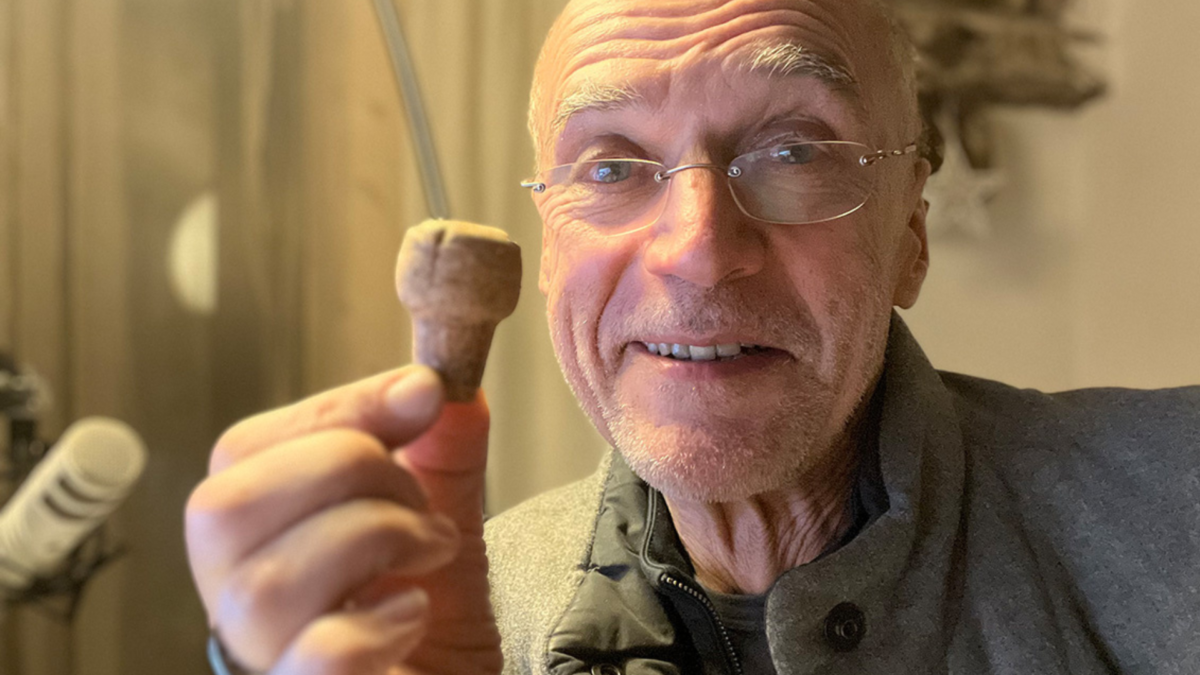
In my early days as a coach, the cork was my constant companion. In the meantime, I use effective alternatives.
Which is why the "thing with the cork" annoyed me for a long time
When I introduced myself as a voice coach 25 years ago, back in my early days as a coach, the question often came up reflexively: "Is that this speech training with the cork in the mouth?" Obviously, at that time, and still today, many people imagine voice training or voice coaching exactly like this: repeat strange articulation exercises, practice tongue twisters and "cork speaking".
What resonated unspoken was the question: "Do my employees spend the time in your seminars with a wine cork in their mouths? Is your repertoire exhausted in repeating exercises from actor training?"
So goodbye corks?
Do you know when your wonderfully complex topic is degraded to a banal exercise in three seconds? I hated it. And the practice with the cork was banished from my repertoire for years.
But the years make you mild, and so when recording the podcast Andreas Giermaier a few days ago, I talked about this probably best-known voice and articulation exercise.
What is meant by cork speaking?
It was invented, according to tradition, by the ancient Demosthenes, the ancient Greek master orator. He had succeeded in curing his notorious mumbling and weak voice by standing on the seashore – speaking loudly against the approaching waves – with pebbles in his mouth. He thus found his way to brilliant pronunciation and developed from a quiet mumbling speaker to the convincing Speaker. And finally rose to become the leading statesman of Athens around 346 BC.
The example set a precedent. The pebbles or marbles, which one or the other may still remember from the film "King's Speech", went out of fashion and were replaced by wine or champagne corks, which protects the tooth enamel.
Since then, legions of voice and speech coaches have had a Selection of corks in a suitcase . And their fun when ten participants try at the same time with violent grimaces "Abraham sat close to the slope" clearly and clearly, a thick stubble of champagne wedged between his teeth.
What exactly does cork talking do?
Anyone who speaks indistinctly, mumbles and forgets the consonants insults the ear of his Listener . Instead of articulating more precisely, others are burdened with the effort of understanding. What they don't last long, and quickly switch to draught.
From a purely physical point of view, a few muscles are responsible for good articulation: tongue, lips, cheeks and masticatory muscle. You may be aware that muscles tend to keep their range of motion small in everyday life for energy-saving reasons. This will shorten over time.
How does cork talking work:
An essential purpose of any articulation training is to stretch the speech muscles again and thus keep them fit. A variety of fun warm-up exercises are ideal for this:
- Grimaces: Cutting a series of crazy faces with a lot of imagination
- Tongue circles: With your mouth closed, explore the rows of teeth inside and outside with the tip of your tongue
- Tongue stretching: Stick your tongue out wide and point in all directions
- Snouts and pouts: Pull lips tight and wide
- Cork speaking: Activates cheeks, tongue and lips and stretches the masticatory muscle
Can you become a good speaker with articulation exercises? Of course not. But clear pronunciation and clear articulation are an important start.
Now it's your turn:
Take a moment and reflect on your way of speaking:
👉 How well do you rate the clarity of your pronunciation?
👉 How are your requirements in digital communication changing?
👉 How could an improved way of speaking improve your credibility and Persuasiveness increase?
If you like this post, feel free to share it! Do you have a question or want to discuss something with me? Then write a comment!
 Yours sincerely,
Arno Fischbacher
Maybe also interesting:
-
Not speaking can cost your career!
-
3 tips for a deep and powerful voice
-
Perform confidently – but how?
The author:
Arno Fischbacher is a business voice coach and rhetoric expert, speaker and author. He prepares executives and employees of the top companies in Germany and Austria for negotiations, presentations and media appearances. Fischbacher is the author of several books, past president of the German Speakers Association (GSA) Austria, chairman of the European Network of Voice Experts, stimme.at.
If you want to learn more about concrete training opportunities with me, please feel free to arrange a free information talk.
Leave A Comment