

 Again and again participants ask me of my seminars and trainings: "What about the well-known Mehrabian study? Is it true or not?" Since there are really many different opinions floating around here, I feel the need to explain this from my point of view:
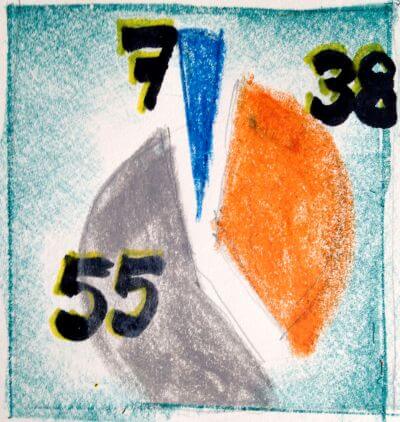
The Formula by the US behavioral scientist Albert Mehrabian from the 1970s regarding the components of our communication is: The success of a conversation is influenced by 7 percent by the content, 38 percent by the voice and 55 percent by appearance.
I interpret this statement against the background of modern brain research and say: It's not about the percentages of the effect. Rather, the order of processing in the brain makes all the difference! When making phone calls, for example, the voice that transports the content is in the foreground. And this sound stimulates and convinces, or not. The following applies here: Your first sentence is the door opener to the conversation. Whether your voice opens doors, whether it convinces in a presentation, is decided solely by you by setting the course in the brain for well-being, for appreciation.
In addition: External stimuli are radically sorted out by perception. We see, hear, smell, taste, touch our environment. And something in us immediately compares the impressions with our inner programs. Important or unimportant? Useful or dispensable? Everything that does not have the highest priority, we shift as a subliminal gut feeling into vague regions.
We have to think of it like this: Numerous stimuli woo us every day. All our lives. The car that races by. The email that arrives flashing. The colleague who knocks. The smell of coffee that reminds you of the break. And the voice that is just coming out of the phone. All of this needs to be perceived and processed. The brain radically minimizes this flood and filters out information at the highest performance level without ceasing. Only what is left is consciously perceived by us. These filters work 24 hours a day. Our reality is therefore completely different from the laboratory conditions that Albert Mehrabian offered his test subjects. In real life, when we hear spoken words, the first thing we always do is:
- about "survival", then
- to examine social aspects such as sympathy, feelings
- or hierarchy and only last
- about word recognition.
That is: First we understand the how, then the what. It takes a remarkable 0.25 seconds for the brain's speech memory to report: "Word recognized!" But the tone of voice has already told us beforehand how we are to understand the word. In order to convince in our phone calls, conversations and presentations, it is therefore important to use these 0.25 seconds very, very wisely.
In my new book, which will be released in September, almost everything revolves around these 0.25 seconds. Interested parties can already pre-order it here.
You
Arno Fischbacher




Lieber Arno, ich stimme dir voll zu was die Wirkung der Stimme anbelangt und wie viel sich in den ersten Sekunden, ja Zehntelsekunden an Wahrnehmung und Inhalt vermitteln kann. Wenn du den Hinweis erlaubst, Mehrabian hast du unvollständig zitiert (wie die meisten). Es ging um Kongruenz. Seine Versuchsanordnung war diese: den Probanden wurden Aufnahmen gezeigt, darauf jeweils ein Mensch der ein Wort spricht. Passten Stimme und Körpersprache zum Inhalt konnten sich die meisten das Wort merken. Passte es nicht (z.B. das Wort “freundlich” aber dazu ein grimmiger Gesichtsausdruck), dann merkten sich 55% diesen Gesichtsausdruck, 38% hatten die unfreundliche Stimme in Erinnerung und nur 7% konnten den Inhalt (das gesagte Wort) korrekt wiedergeben. D.h. der Inhalt kommt nur zu 7% rüber, wenn das WAS wir sagen mit dem WIE wir es sagen nicht zusammenpasst. Bei Inkongruenz dominiert die Körpersprache die Wahrnehmung. Anders gesagt: wollen wir unseren Inhalt wirkungsvoll vermitteln, können Stimme und Mimik/Gestik eine sehr große Rolle spielen.
Dear Dominik, of course I know the study and also the setting. Mehrabian himself is quite slightly annoyed by the common misinterpretation and explains his research results plausibly in a BBC interview from 2009:
http://wordsthatmovemountains.com/files/page1_1.mp3
What interests me is not the observable reaction of the subjects of this experiment, but how Mehrabian's experiment from 1968 is to be seen in the light of current findings in psycholinguistics and perception research. The timing of the processing of visual and acoustic stimuli rather illuminates the matter – and the realization that word processing in the cortex is the very last thing to happen in this processing cascade.
Kongruenz ist ein wünschenswertes Attribut in der Kommunikation, keine Frage. Wenn ich Mehrabians Kommentare zu seiner meistzitierten Publikation lese und höre, geht es immer um die Dominanz von Wirkungselementen. Und alle seine Experimente zeigen, dass “vocal and visual expressions” die Wirkung des Wortsinn eindeutig beeinflussen.
It's the year 2014. The study is from 1969. One would think that there would be more up-to-date material that professionals would refer to.
Und selbst wenn nicht: ist es nicht langsam etwas kindisch, dass Körpersprachler, Stimmtrainer und Texter darüber streiten, wessen Fach das “zuerst verarbeitete” ist?
Hello Franz,
whether in 1968 or 2014 – the question behind all these considerations is always the same: How can I communicate with my interlocutors or listeners so that I am well understood and convinced. What has changed in the meantime, however, are the findings from the various branches of research, such as perception research, brain research and linguistics. This has made it a little clearer why some people seem more convincing than others.
As a coach and trainer, I am particularly interested in how I have to adapt my training methods based on these findings. That's exactly what I point out in my contribution.