

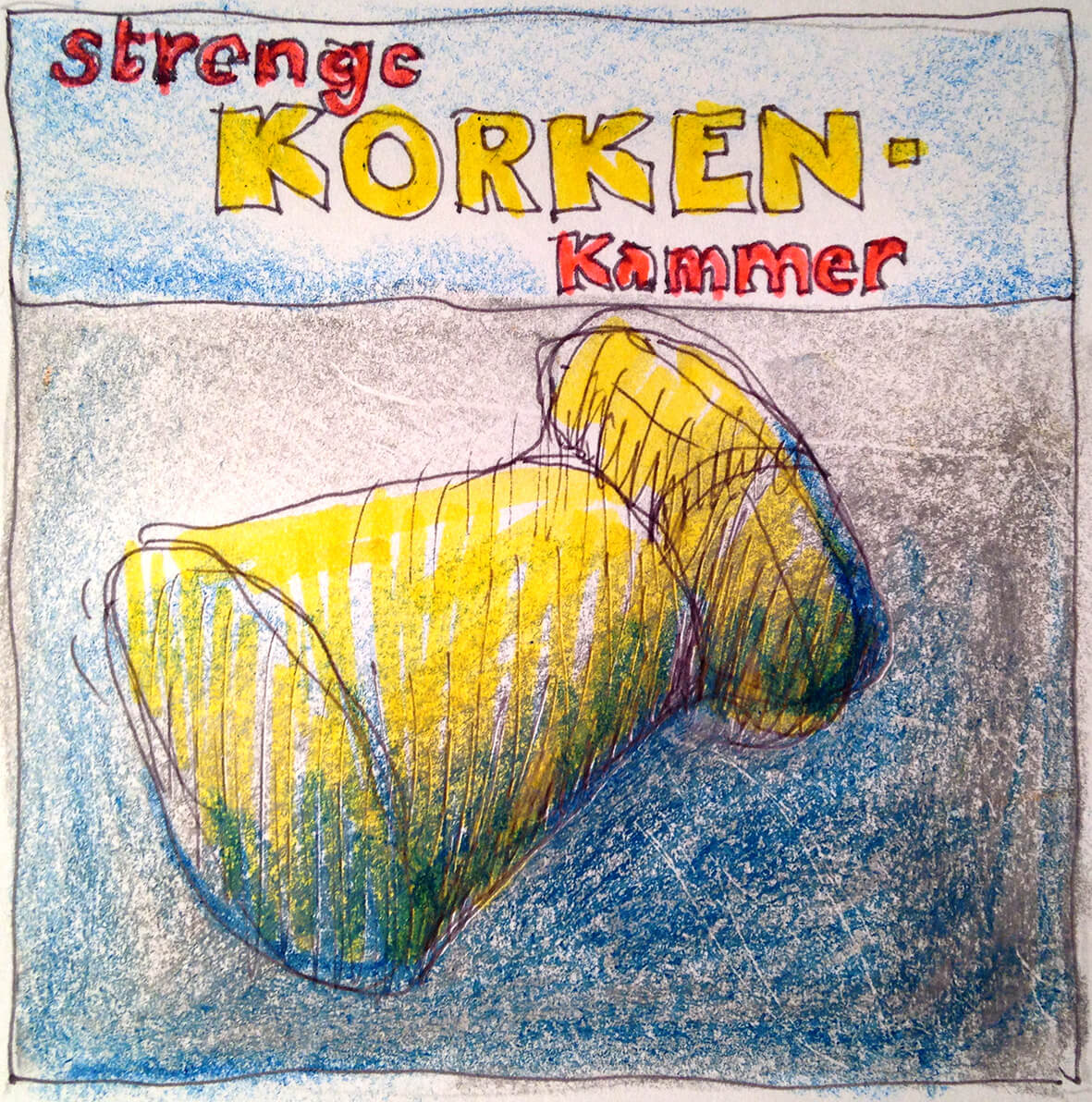
Strangely gurgling sounds come from a seminar room. It sounds as if someone is trying to say something under threat to his life. However, the articulation does not really seem to succeed. After a few minutes of concentrated listening, the secret listener succeeds in recognizing word fragments. "Thank you, that's enough, take the cork out of your mouth now," a very clear voice suddenly sounds. The voice coach allows his student to take a break. A break from the strenuous method of cork talking...
A fictitious example? Yes. But obviously, many people imagine voice training or Stimmcoaching just like this: articulation exercises, practicing tongue twisters and "cork talking".
I guess that's probably the reason why I often hear questions like this from potential customers and interested parties: "Mr. Fischbacher, what are your methods?" The question resonates quietly: "Do my employees spend the time in your seminar with a wine cork in their mouths? Is your repertoire also exhausted in repeating exercises from actor training?"
"Oh," I like to say, "no! With me, you can see how you can work and win in the best possible way in every moment and every situation in a coherent totality of voice, body language and rhetoric."
Don't get me wrong. The methods of cork speaking, articulation training are very useful and also very effective. However, I recommend them more for people who have a lot of time to develop their voice. This time is usually not available in everyday business, in business. Very often, managers and department heads contact me with a specific mission. To make them vocally and performance-wise fit for a certain important presentation in their company. This usually happens at very short notice. We rarely have time to practice with corks here. As a voice coach for business, it is therefore my job to teach these people methods with which they are ready quickly and precisely on the deadline. And on exactly this day, the right combination of voice, body language and Rhetoric for an all-round convincing performance.
So we see that the good old cork can be an exciting element to train voice and pronunciation in the long term. If you want short, fast and very effective results, other methods are recommended. In other words: All roads lead to "voice" ... Some just last a little longer than others.
Have fun and enjoy developing your voice with your preferred method.
Yours, Arno Fischbacher


The exercise itself is great, very effective and has an immediate effect and has been for over 2000 years. Socrates already put a stone between his teeth. However, stone and cork have the major disadvantage that the temporomandibular joint remains firm. It is therefore much better to perform the exercise with your thumb and talk about it casually. http://www.foninstitut.de/seminare-offen-sprechtraining-uebung.html
I definitely recommend the exercise. It is ideal, for example, to discuss the AB afterwards. Then the articulation is clearer and the voice fuller. In addition to the effect on pronunciation, thumb speaking also has an extremely positive effect on the resonance of the voice. You almost always have time to pinch your thumb between your teeth and count to 10 before the performance. I'm definitely a big fan of the exercise 🙂
Every sound from the bottom of your soul is an effective act.
Lorenz Kellner (1811 – 1892)
Voices are audible moods.
Andreas Tenzer
Hallo Ariane, ich hab mich schon gewundert, dass auch der Community nicht gleich ein Aufschrei gekommen ist. Na klar ist die Übung wirksam (und speziell, wenn man den Daumen nutzt, da stimme ich entschieden zu!). Mir geht es jedoch eher um die Frage, wie nachhaltig isolierte Stimmübungen für die rasche Weiterentwicklung des Stimmbewusstseins sind. Da sind meine langjährigen Erfahrungen negativ. Deshalb setze ich im Coaching und Training vorrangig Erfahrungen ein, die in den ganz normalen Alltag integrierbar sind und nicht “Übungen” im klassischen Sinne darstellen.