

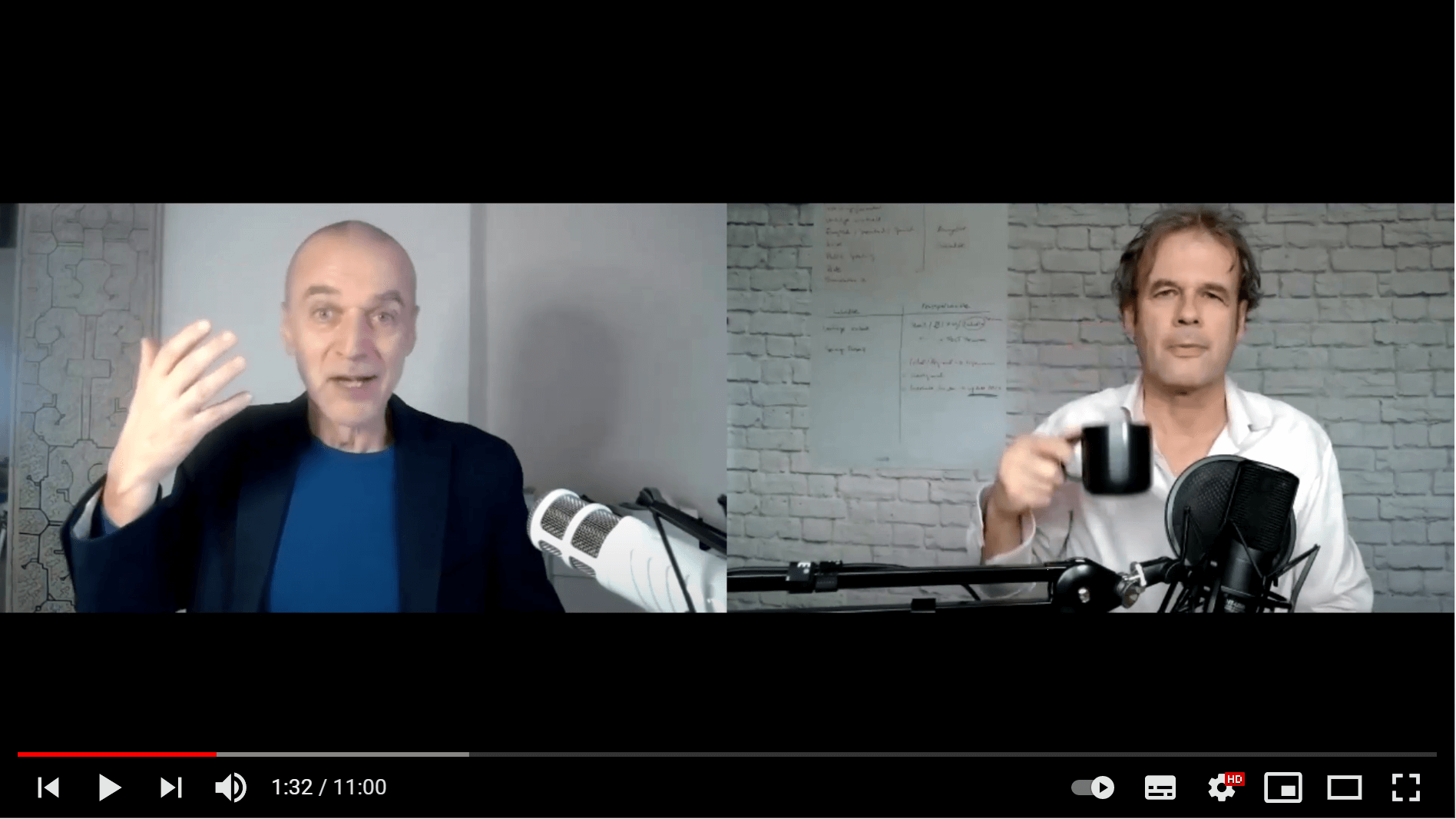
 When two proven experts talk about a topic, a lot comes out for you: plain language. Clear messages. Actionable practical tips. Stephan Heinrich, the "listener among sales trainers", conducts exciting and highly informative interviews with industry giants such as Walter Zimmermann (win price talks), Prof. Dr. Niels Brabandt (Leadership in Sales), Tim Taxis (cold calling), Stéphane Etrillard (sovereignty), Andreas Bornhäußer (charisma) and many others.
A new issue is published every Wednesday every two weeks. As of today, the interview with me about the power of the voice in sales is online.
Voice and sales, a topic that is not quite commonplace: What makes the voice so crucial in sales Medium?
The tone makes the music. The brain consciously absorbs content, i.e. the words – but the sound of the voice determines how it is received.
Example. Neatly dressed salesman opens his mouth. Or: Call with recited introduction.
In practice: When and where does voice play a particularly important role in sales?
- First impression, (cold) calling, start of the conversation, start of the phone call
- As a listening signal: Real, true listening – or just pretending is clearly audible
- When it gets emotional
- With each Objection
- Fear of the customer, fear of reproaches, feared price discussion, after defects and complaints
- when it comes to credibility: do I stand behind my product myself?
- Self-confidence, self-confidence, charisma
- when uncertain customers are to be activated without appearing pushy
What are the most important qualities of the voice in sales?
Empathy:
One of the most essential qualities of the voice is empathy. So: How approachable does what is said sound? To what extent does the salesperson signal willingness to listen and partnership while speaking? The opposite of the empathetic voice would be an overhang of dominance in speech, a commanding tone, a voice that signals a clear hierarchy. Under the motto: I tell you what is, and you listen.
Trust:
A second essential quality of the voice is the inherent tone: Does the voice convey confidence and security to me? We hear this inherent tone when someone is stress-free; physiologically speaking: when the muscles involved in voice production – especially in the larynx – do not have any improper tension. If the vocal folds can vibrate freely, our voice sounds relaxed, relaxed, full, resting in itself. The opposite would be audible stress tension, e.g. due to lack of time.
Leadership:
A third important voice quality from my point of view is the attentive willingness to lead. That sounds a bit unwieldy – what would be the opposite? To do everything just out of the action routine! This voice quality is about awareness; i.e. the ability to perceive and guide oneself, one's actions and emotions. Self-leadership is the prerequisite for leading other people – in an empathetic sense!
Activation:
As a generally important voice quality, I would like to emphasize the load-bearing capacity. It signals life energy and resilience. The opposite of this would be a brittle or rough or tired voice. In my workshops, I also see that many people want to be able to speak in a room-filling manner. Their primary concern is to convey content well in meetings or lectures.
Hier bestellen Sie den Sales-Up-Call “Stimme verkauft!”: http://visionselling.smile2.de/stimme-verkauft-sales-up-call-weckruf-fuer-ihren-vertrieb


Leave A Comment