

Zum Telefon gegriffen und seinen ersten Coachingtermin vereinbart hatte Ing. Metzinger* spontan nach der Rückkehr von seiner Reise zur Konzernzentrale in Amsterdam. “Smalltalk lernen und anwenden” war sein Anliegen. Als technischer Leiter der Produktion in Österreich hatte er im obligatorischen Führungskräftemeeting routiniert die aktuellen Zahlen berichtet. Wenn es um seine Fachthemen geht, war er voll in seinem Element. Doch am Abend, beim gesetzten Dinner mit der Eigentümerfamilie, erlebte er sein Waterloo.
He had packed his elegant dark suit, as well as his tie – but he had not foreseen that he would be sitting at the long, nobly laid table opposite his superior's wife, of all people. From both sides, they tentatively tried several times to get a conversation going, but in vain: He, who could discuss his technical topics for hours with a hot head, saw the threads of conversation repeatedly run into the sand after a few words. He failed miserably at small talk.

In this article, you can read three easy-to-use tips that can be implemented immediately on how to make contact more quickly and find your way into conversation more easily in the many important situations of everyday life. Learn and apply small talk – without effort!
Why it's worth mastering unexpected small talk
At work, it is often events, trade fairs or customer events where it would be so useful to talk to important people. In many countries, it is frowned upon to talk about business right away when initiating business – only the "small conversation", the small talk, opens the doors to the actual business. But even in private life, without this fine ability to start conversations, it can be quite tedious if you stand taciturn on the sidelines at family gatherings or find it difficult to chat with your in-laws about trivial things.
What sometimes makes learning small talk difficult
Maybe you know the feeling when you come to stand next to someone at an event and suddenly this oppressive feeling appears: "Oh dear, now I guess I have to say something!" And already this little malaise arises, this little inner pressure that makes it doubly impossible to take the first step to ease the situation.
What can trigger this little uncertainty
Tension through silence: In der sogenannten “schwarzen Rhetorik”it is used as a means of pressure, in everyday communication it can scream very loudly – silence. Saying nothing and being mute next to another person can build up a lot of tension. And this often prevents them from chatting casually and informally.
Uncertainty due to presumed expectations: Perhaps you know this from very banal everyday situations, such as when you enter a café. Even if you then continue your way to the one free table in a targeted manner - for a short moment the eyes are on you and this expectation tension arises: How do the others perceive me? What expectations do they have of me? This creates a certain pressure to act, which is probably discharged in the café by an energetic step towards the seat. However, if the scene takes place at an event where you enter the door to a well-filled room, which path do you take? The one to a group of people you don't know? Or the safe path to a corner where you can acclimatize first?
To be introduced to someone: Ein Kollege oder Freund meint es gut mit Ihnen und stellt Ihnen eine(n) der Anwesenden vor. Ein kurzer Händedruck, ein “Hallo!” oder “Guten Tag!” und bald erstirbt die Unterhaltung. Zum Schweigen (siehe oben) kommt hier noch ein unbedachtes Hemmnis hinzu: Wenn Menschen einander gegenüber stehen, entsteht ungewollt eine große Erwartungsspannung, ganz so, als wolle man etwas vom Gegenüber. Was beim Präsentieren ausgesprochen nützlich ist und Aufmerksamkeit schafft, oder beim Delegieren einer Aufgabe den Nachdruck verstärkt, verursacht hier manchmal eher einen Moment der Unbeholfenheit, des Verlegenseins.
Video: An experience while shopping in the early morning showed me the way to the findings of spatial psychology and the principle of closing ranks. But see for yourself ...
How the voice increases insecurity
Whatever you say, your voice expresses your current state of mind, whether you like it or not. The little uncertainties described above creep treacherously into your vocal sound. That wouldn't be tragic in the everyday moments described if your own voice didn't have such a strong effect on you. Your own tone acts as a mood enhancer. Perhaps you still remember those moments from your childhood when you spoke loudly in the dark basement to regain security? However, if you hear a cautious hesitation in your own voice, this reinforces the basic feeling.
The voice sets the social course in networking
Most of the time, we are not aware of the signals we are sending through our voice. However, how we speak has a very decisive influence on how we are perceived by others. Our voice sets the social course: because what we say provides information about our personality – so it's about personal sympathy. Whether we are well received by others or rather less, what first impression we make, is therefore decided the moment we open our mouths.
The 4 Attributes of the Human Voice
1. The dominance attribute: Can we take the lead? Can we have our say? The way we say something signals how it is to be understood and shows whether we stand by what we say. It expresses it through enthusiasm, power or drive in the tone.
2. The empathy attribute: Is someone superficial or not? Does this person have history and dealt with it? Has he been busy with himself? What about the ability to criticize? We convey all this through empathy signals in our expression. In this way, we can convey to others how approachable we are, whether we can also be talked to, whether we think outside the box or not.
3. The stress attribute: Tension becomes audible! Are we getting nervous? When we are stressed, there is tension in the body, which of course also shows up in our voice - which is usually not conducive to the situation. Stressful situations dramatically change the voice h and make our nervousness noticeable.
4. The relationship attribute: Actually, the "killer attribute" that sets the course first and foremost: Do you speak to others as a person or as a role? Our mammalian brain has a built-in switch that automatically protects us from impersonal addresses. For example, we immediately feel – think of advertising calls, for example – when someone signals a role through his voice: "He's not interested in me – he wants something from me!" – be it time or money – but in any case not me as a person. We don't want to have anything to do with someone like that, it immediately comes across as unsympathetic. So the relationship attribute makes a dramatic difference between whether you want to talk to whom or not. You can hear whether the other person is with us or actually has completely different intentions. You can hear when someone is not with us in their heads.
Learning Small Talk: How to Use Your Body Language and Voice Consciously
The voice is and remains a result of many different factors, some of which we cannot influence directly. Therefore, one thing is quite certain: Faking does not help! But how can you still find relaxed small talk easily, effortlessly and safely?
First of all, pay attention to your room position



In many first moments of personal contact, we find ourselves – without wanting to – head-on towards our caregiver. Being attentive to each other in conversation is considered polite and a sign of appreciation.
Soviel Gutes diese “konfrontative Position” – wie sie in der räumlichen Psychologie genannt wird – auch haben mag, sie hat eine höchst delikate Kehrseite. Ohne es zu wollen entsteht durch dieses einander gegenüberstehen ein innere Druck zu handeln.
- Standing opposite each other has a stimulating effect. Vielleicht kennen Sie das: Kaum haben Sie jemanden begrüßt, entsteht auch schon das Gefühl, als müsste man jetzt etwas sagen. Wie oft aber liegt uns jetzt gerade kein intelligenter Satz auf der Zunge! Macht nichts, eine Floskel geht immer … und schon sagen wir: “Wie geht’s?” oder etwas ähnlich originelles. Die “Gegenüber-Position” lässt in uns also Handlungsdruck entstehen. Was in vielen Situationen des Alltags ganz sinnvoll ist (etwa, wenn Sie auf jemanden zugehen, um nach einer Straße zu fragen), kehrt sich in Smalltalk-Momenten gegen uns und hemmt spontanes Handeln.
- Placed frontally, the personal effect between interlocutors is particularly strongly reflected. In other words, if you feel uncomfortable in a small talk moment, this also causes a feeling of discomfort in your counterpart.
- The frontal position seduces you to talk about each other. Es ist kein Zufall, dass die sprichwörtliche Gesprächseröffnungs-Phrase “Wie geht’s?” lautet. Sie sprechen über das, was Sie sehen. Der Blick definiert das Objekt des Gesprächs. Und das führt beim Smalltalk rasch zum Ersterben des Gesprächs – wie soll man über Persönliches sprechen, wenn man den oder die andere ja gerade erst kennen lernt?
Read now how you can effortlessly start a conversation in the future through three slightly changed behaviors. Learn small talk by using the unconscious power of body language, voice, and language for your gain.

Learn small talk: 3 steps to a relaxed conversation
No, my first hint is not about what is best for you to say in order to strike up a conversation with someone. As in many other important moments of communication, it is not about talking, but about listening to it. Therefore, I recommend that you ...
Step 1: Notice what your counterpart's attention is focused on.
Don't rush into the house now. Introducing yourself right now or asking your conversation partner for his opinion on the presentation is usually not yet appropriate. In the first step, refer to what your counterpart's attention was obviously focused on. In this specific case, the buffet, or the growing queue of hungry guests in front of the buffet.
Schritt 2: Wenden Sie sich nun jenem Punkt zu (“Schulterschluss”).
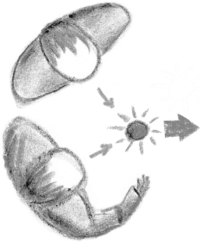
Let's assume that the presentation of a well-attended event has just ended, you and the other guests flock to the buffet. With your plate in hand, you will find a seat at a bar table. Her counterpart is also putting down a glass and plate.
Drehen Sie sich körperlich in jene Richtung, in der die Aufmerksamkeit Ihres Gegenüber eben noch lag (Blick auf die Gästeschlange vor dem Buffet). Schmunzeln Sie ruhig angesichts der wachsenden Wartezeit und lächeln Sie Ihrem Gegenüber zu. Sie haben nun Kontakt aufgenommen, ohne auch nur ein Wort zu sagen und dabei das “magische Dreieck” inszeniert zwischen zwei Gesprächspartnern und einem Objekt.
Step 3: Say a few words about the observed events
Perhaps you are already noticing how the initial inner pressure to start a conversation as quickly as possible evaporates through the physical turn into closing ranks and gives way to a pleasant serenity.

Es gibt nun auch plötzlich keine Veranlassung, übereinander zu sprechen – das “magische Dreieck” bietet einen perfekten Anknüpfungspunkt für ein paar launige Worte über das tolle Catering, über Menschenschlangen oder die Schlacht am kalten Buffet. Das Eis ist gebrochen. Der anfängliche Druck, ein paar intelligente Worte zu sagen, ist wie weggeblasen.
Now at the earliest is the opportunity to spontaneously stretch out your hand to your counterpart and introduce yourself by first and last name. Surely you have noticed, now you are facing each other head-on again – spatial psychology only knows these two spatial forms of relationship between people in communication: shoulder to shoulder or the frontal conversation position.
Learn small talk: How to recognize your benefit in everyday life
Conversation starter: Drehen Sie eine kommunikative “Aufwärmrunde”, bevor Sie zum eigentlichen Thema kommen. Nehmen Sie Details des Büros wahr, ein originelles Plakat an der Wand oder den Zeitungsartikel, der aufgeschlagen am Schreibtisch liegt. Nicken Sie interessiert und wertschätzend in die Richtung dieses Details. Warten Sie auf die Reaktion Ihres Gesprächspartners. Genießen Sie, wenn sich daraus ein kurzer Smalltalk ergibt.
Sale: Achten Sie darauf, wie entspannt und persönlich Ihre Stimme klingt, wenn Sie aus dem Schulterschluss heraus mit Ihrem Kunden über gerade wahrgenommene jene Details plaudern. Dadurch entgehen Sie der Falle, dass die Stimme oft sehr unpersönlich und “geschäftlich” klingt, wenn Sie ohne Aufwärmrunde gleich zur Sache kommen.
Give feedback: Avoid giving feedback from a confrontational position, as this will provoke unnecessary justifications. Look at the matter to which you want to contribute your observation and first ask your conversation partner about his or her perception.
I wish you good luck with your relaxed small talk and am looking forward to your thoughts and comments!
 Yours sincerely,
Arno Fischbacher
Illustrations from: Arno Fischbacher, Voice sells, the power of the voice in business, GABAL
Read also:
- Perform confidently – but how?
- Become self-confident through confident language and powerful voice
- How to get your stage fright under control (Part 1)
P.: If you like this post, please share it in your network! Do you have a question? Just write a comment! I look forward to your thoughts!
The author:
Hello dear Arno,
es freut mich besonders, dass Du wieder “aktiv” bist und dass es Dir besser geht.
Thanks for the valuable tips, you forget a lot if you don't practice every day.
I have a question:
when I contact someone I know personally by phone, I usually start with small talk. After a few routine questions, I swing back to the essentials.
How long should this small talk be, so that you don't lose focus on the essentials and the business remains in the foreground (above all, it's about my authenticity, keeping the balance between personal and business in balance).
Manchmal kann ich gut “händeln” doch oft habe ich das Gefühl, dass der Smalltalk zu lange ausfällt.
Thank you in advance and have a nice weekend,
with warm regards,
Katalin
Thank you, dear Katalin,
for your lovely lines and your nice feedback! Yes, I'm doing quite well, the difficulties of the last two years have been overcome!
To your interesting question about small talk as a conversation starter on the phone:
Not rushing straight into the house and immediately addressing the business topic is a perfect strategy, especially in B2C. Often it will be enough to address something you have noted down from the last customer contact. Something your customer told you the last time, etc. It is important not to lose sight of the reason for the call. So don't be too excessive when getting started.
Oft hilft es, eine kurze Gesprächspause entstehen zu lassen – und dann in medias res zu gehen. Etwa mit einer Suggestion wie: “Herr XXX, vielleicht erinnern Sie sich an unser letztes Gespräch über XXX … wie/ was/ wann …?”
Looking forward to your thoughts!
Best regards,
Arno