

Language is man's most important means of communication. Even in the womb, the child hears its environment and soon after birth, the baby begins to babble. At two months, it goes through the so-called "first babbling phase", after 6 months the "second babbling phase". With some adult participants in video conferences, you get the impression that they have never gotten past that age, or are already on their way back there.
-> Practical tips for your speech, for more attention, more results & more successes: Webinar on Monday, 16 August, 19:00, click here to register!
Guest article by Mag.art. Eva von Schilgen, first published in www.schlossseiten.at/magazin
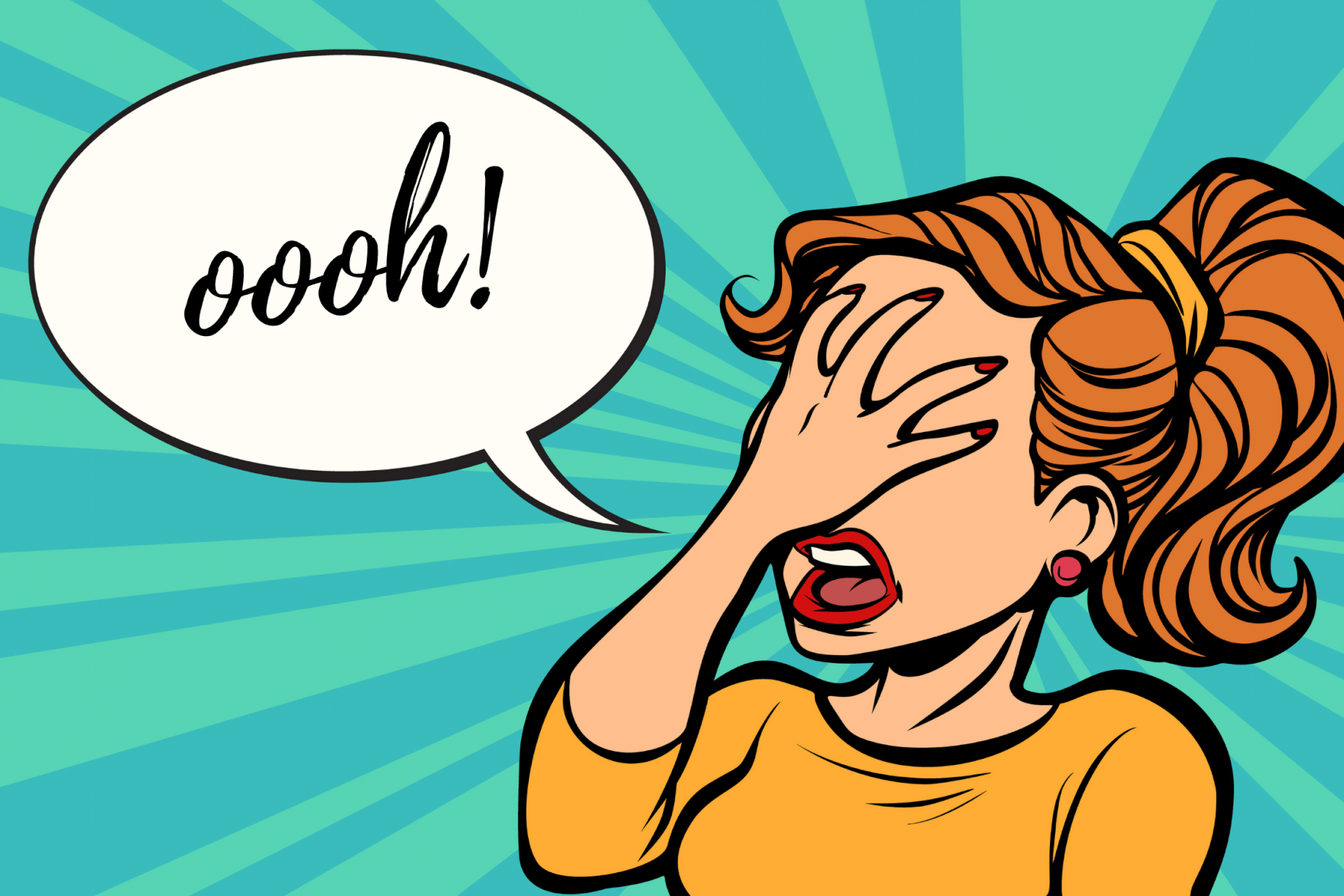
Language is what makes a human being.
PRONUNCIATION that which makes him understandable.
(Eva von Schilgen (1948 – planned 2068), journalist, satirist)
How it all began
It is assumed that humans have been able to communicate by means of language in the modern sense for a maximum of 125,000 years, but at least for 40,000 years. Fossil finds suggest that this development took place over a period of about 2 million to 7 million years and was accompanied by the anatomical change of the pharynx into a resonating body and the simultaneous enlargement of the cerebellum.
For thousands of years, we have been communicating with other people face to face and have learned to classify them as "friend or foe" or "like or dislike" after a few seconds. According to a study by the US psychologist and professor at the University of California, Albert Mehrabian, from 1967, our first perception is 55% of body language, 38% of the pitch of the voice and only 7% of the content of a conversation.
The disaster takes its course
In modern communication via the screen, emotional conclusions are almost only possible on the basis of facial expressions, which is difficult in the case of a "poker face", which has also been trained in men for thousands of years. So it may be that the attention is increasingly focused on the voice. In order to prepare for the most perfect video appearance, it would be advisable to use the own voice and – if the result is not satisfactory – to consult a voice coach.
But a weakness is not always a deficiency
The opposite can also have an effect:
- EH'S, often used in your speech, show that you can talk faster than you think.
- BREATHLESS Talking lets the person you're talking to know how nervous you are.
- DIALECT You don't want to be understood?
- EMOTIONAL , a reason for sensitive partners to end the chat quickly.
- PHRASES such as "dear participants..." often inserted, you are pointlessly extending your speaking time.
- RUSHED to deal with a matter demonstrates your indifference.
- HIGH VOICE , is appropriate when uncertainty is to be signaled.
- SLOW communicating hardly increases attention, chat partners but tires them.
- QUIET chatting there is usually interpreted as a weakness in decision-making.
- LISP if you are female/young/blonde and want to make a naïve impression.

- MONOTONOUS recite makes your disinterest in the chat the other participants.
- MOUTH. FULL. Eating or drinking during the chat reveals your appreciation.
- PARROT: adopt the way of speaking of the other person in order to appear (more) sympathetic
- CHIRRUP could indicate an ill-fitting set of teeth and therefore negligence.
- SWALLOWING SYLLABLES testifies to the fact that you want to "speak" but do not want to "say".
- STACCATO the torrent of words without taking a breath is a method of talking others "dead".
- STAMMER , unless you have a language error, is a signal that you can't think of anything on the subject.
- REPETITIONS may indicate that you are not "on the case".
- Z-FOR SILENCE There is nothing to say about that
What smart people say about it
Listening to a speech is often harder than giving it. ( Peter Sirius (1858 – 1913), born Otto Kimmig, German grammar school professor, poet and aphorist)
„ The standard language describes, the dialect characterizes. “ ( © Fritz P. Rinnhofer (1939 – 2020), marketing manager and publicist)
Most people grimace and speak louder when their strength wanes. ( Michel de Montaigne (1533 – 1592), born Michel Eyquem, Seigneur de Montaigne, French philosopher and essayist)
The human brain is a great thing. It works until the time you get up to give a speech. ( Mark Twain (1835 – 1910), born Samuel Langhorne Clemens, American storyteller and satirist)
"In the way of speaking Persuasiveness and liveliness; the pause in speech is the smallest holiday unit." ( Katrin Hagenbeck, (born 1967), voice coach)
Read Also:
If you would like to learn more about specific training opportunities with Arno Fischbacher, make an appointment here free information talk.
Leave A Comment