

It was the most embarrassing moment of my early coaching career. Even during the morning hours of the seminar, my voice had sounded scratchy. Whenever I tried to speak loudly, the sound stopped for a moment. I had confidently tried to cover it up. But after the lunch break it was clear: I cannot finish this seminar. The voice coach is hoarse.
The winter sun was brightly reflected on the flipchart sheets on the bulletin board. My participants had just taken their seats in a semicircle on their chairs again and looked forward expectantly. What else could I do: I excused myself with difficulty croaking and with a sore throat and broke off the seminar.
The shock of this event sat in my bones. So, in the days and weeks that followed, I began to systematically analyze how this could happen. What I had overlooked or paid too little attention to. And what I had to do differently and better in the future for good reasons.
Several things emerged.
Three bitter realizations
- I had paid far too little attention to what I eat and drink to survive strenuous seminar days vocally well
- With a certain overestimation of myself, I had assumed that as a trained actor I could handle my voice well enough anyway and didn't have to do anything more for it.
- It was clear to me that the dry air in the well-heated seminar rooms affects the skin and dries it out. But the fact that it could affect my voice so much was only made clear to me by this super disaster.
What pushed my voice to its limits back then
The story of coffee
The life of a coach is quite challenging. You are on the road from one seminar hotel to the next, reeling off many kilometres of motorway, arriving late in the evening, then checking the most important e-mails ... sufficient sleep remains an unfulfilled luxury. The main thing is that there is a large thermos of coffee at the table in the breakfast room in the morning!
And during the seminar? At least the coach has to be awake, was my motto – and the coffee cup next to the box with my flipchart pens was always filled.
Strange experiences in the recording studios came to my mind, which had gladly booked me as a young speaker with a good voice for advertising recordings. When it came to recording longer texts, I had noticed that my voice changed in a strange way from the first sentences to the end of the recording. It sounded a little higher and thinner, strangely tense. And there was always a large mug of filter coffee next to the microphone ...
Coffee is supposed to be bad for the voice?
No, let's leave the church in the village. You can't put it that way. As always, the dose makes the poison. For me, at least, if I have a strenuous seminar day ahead of me today, have slept too little and want to wake up, then fifteen minutes of dynamic physical exercises and a cold shower are enough to get my circulation going.
The thing with the cold start
Voice? I can! That or something similar was probably my attitude back then. Warm up? Oh, I don't have time today, that's fine. For a long time, I didn't think about the fact that even the finest handcrafted Rolls-Royce can't perform in a cold start and wants to be supplied with good lubricants.

Today I know: The strain on the voice caused by long periods of speaking under difficult conditions is clearly underestimated. While at least basic training is required for the exercise of professional activities, the use of the voice in communication professions is taken for granted. With far-reaching consequences, for example, on the absenteeism in late autumn, as in relevant statistics can be read .
Whether you speak to larger groups, whether you have emotionally exhausting Have conversations or whether it's loud all around or the room in which you're speaking is echoing, it doesn't matter. If they do it for more than 2-3 hours a day, they belong to the group of professional voice users (Heavy Voice Users).
I have written down the following tips especially for you.
Why the strain on the voice is particularly high in winter
It seems natural that from late autumn onwards, sore throats, colds and an attacked voice will be on the agenda. The equation is: winter = cold season. On closer inspection, however, the nasty germs responsible for this are also buzzing around in summer, apart from perhaps cyclically occurring flu viruses.
So why is the human organism so particularly susceptible to respiratory diseases during the heating season? It is well known that the mucous membranes in the nose, throat and especially in the larynx form a natural barrier against the penetration of pathogens.
Dry heating air weakens the natural barrier of the mucous membrane
It is the indoor climate that sometimes makes us sick. In heated indoor spaces, the relative humidity drops from a pleasant 40-60% in summer to up to 15% in winter. This results in air conditions like in an airplane. And that dries out our important mucous membranes.
Sometimes you can clearly feel how it gets dry in your throat when you breathe in. The moist exhaled air can then no longer compensate for this. And suddenly that special lubricant is no longer available that allows us to achieve vocal excellence.
What to do for a healthy voice in winter?
Drink water throughout the day
A simple motto, isn't it? The catch is, if we don't make a habit out of it, we think about it too rarely. Because when we feel thirsty, it is too late, then we are already close to dying of thirst.
You are now thinking: I drink all kinds of things during the day anyway? Note: The coffee for breakfast, the soda for lunch, the coffee in the afternoon and the beer in the evening are clearly too little to adapt our fluid balance to the changed conditions of winter.
Let's be honest: How much do you really drink? It's worth keeping a record for a few days. Spread over the day, it should be 2 l, especially if you have a lot and Speak aloud must. My personal tip: There are simple apps that help you keep track of things (such as "My Water" in the Apple App Store)
What is better to avoid?
If your voice is already affected, the voice doctor recommends Dr. Josef Schlömicher-Thier First of all, take a critical look at your eating habits. This is because too much stomach acid can lead to reflux and attack the voice.
The "Rule of Five Fingers" shows which ingredients of your diet are better to reduce:
- too sweet
- too spicy
- too fast
- too late
- under stress
If it's already scratchy in your throat, avoid sharp drops, it's better to use Isla throat lozenges (free sample pack at: https://isla.at/probepackung )

If you are challenged at work despite a hoarse voice and cannot maintain the recommended vocal rest:
- No chamomile tea, it dries out their mucous membranes even further
- No aspirin or other preparations containing ASA because of their blood-thinning effect
Household remedies
- Gargling with sage or marshmallow tea
- Gargling with saline solution from healing brine (pharmacy)
- A morning nasal shower with healing brine is also helpful.
Ensure a good indoor climate
If you want to get to the root of the problem of dry air, make sure there is sufficient humidity in your workspaces. From my own experience and because I have been using them myself for years, I am happy to recommend two devices, both of which provide good air in my home office every day in winter:
- Stadler Form Humidifier Oskar mini or Big
- Dyson AM 10 Humidifier with Ultraviolet Cleanse and Ultrasonic Technology
Voice exercises against the morning cold start
As an actor, fifteen or twenty minutes of warm-up exercises before each performance were part of the routine program for me. As a self-employed coach, my attention was probably focused on other things at the beginning, and I probably lacked the incentive from colleagues. I told you the result above.
My summary: It is not necessary to do voice exercises for hours. A little morning routine can work wonders:
- Move your two shoulders, circle three times clockwise and three times counterclockwise
- Humming a pleasant melody while brushing your teeth
- Let your tongue slowly circle in front of and behind your rows of teeth, at the top and then at the bottom
- Activate your diaphragm, imitate a starting motorcycle carelessly and loudly: "brmmmm, brmmmm!"
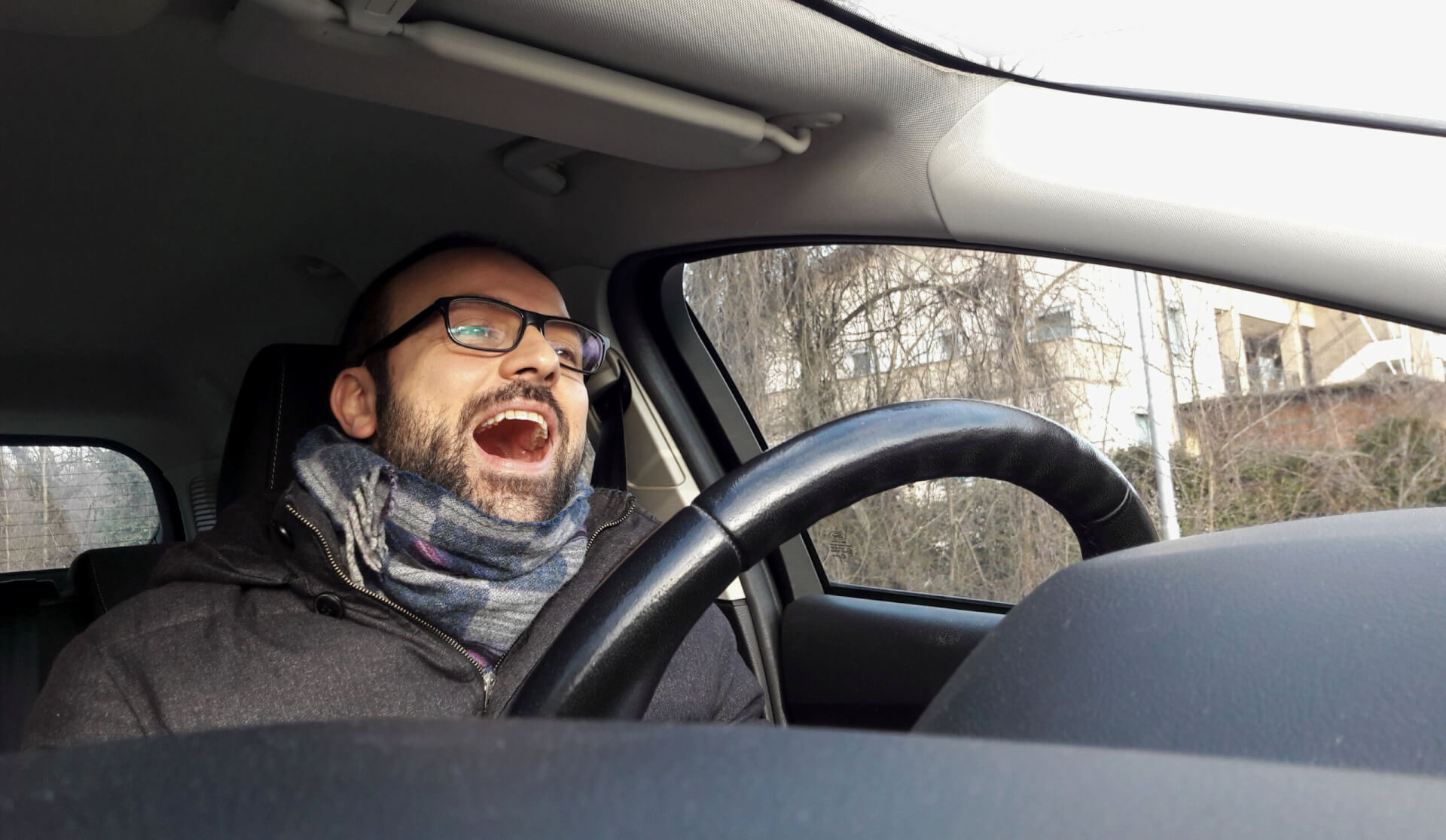
- Do you regularly spend time in the car? On the topic of "Warming up your voice in the car" I have a created my own episode of my podcast
All the best and stay healthy!
You

A rno Fischbacher
Read Also:
The author:
Arno Fischbacher is a business voice coach and rhetoric expert, speaker and author. He prepares executives and employees of the top companies in Germany and Austria for negotiations, presentations and media appearances. Fischbacher is the author of several books, past president of the German Speakers Association (GSA) Austria, chairman of the European Network of Voice Experts, stimme.at.
If you would like to learn more about specific training opportunities with Arno Fischbacher, make an appointment here free information talk.





Leave A Comment