

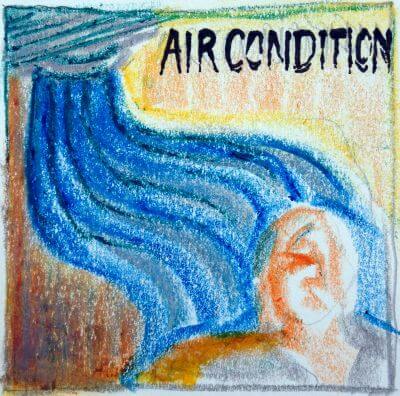
The temperatures move in midsummer climes. How much we like to change sides of the road, almost panting from the heat, to immerse ourselves in cooling shade. Or we are happy to find refuge from the heat in chilled restaurants, shops and official buildings. This is very pleasant if the cooling is not exaggerated. Travelers to Asia and especially to the USA are familiar with the phenomenon: In shopping centers and hotels there, there is usually almost Siberian cold, which can only be halfway "survived" by taking sweaters or knitted vests with you. To my chagrin, I am increasingly noticing this bad habit in our latitudes. Yes, for me it's a bad habit, because our body and especially our voice are simply not made for these rapid temperature fluctuations. And react accordingly.
Introduce yourself , you are waiting on a heat-scorching platform for an ICE or Railjet. Climb in with the last of their strength – and – enter an ice cave. From what feels like 35 degrees on the platform, you are exposed to a temperature of about 17 degrees from one minute to the next. There is a draught from all sides. What you initially perceive as a pleasant cooling down quickly becomes a health risk even on short train journeys. For many people, the voice reacts after a short time of permanent cooling. Although you have hardly spoken, it sounds occupied, no longer quite clear, you can feel this little anxiety in your throat. Often repeated clearing of the throat then intensifies the misery.
Why is that? Idiosyncratically, our complaints on trains, cars and planes have very different causes, even if they lead to a dripping nose and discomfort in equal measure.
By train and car the summery hot outside air is cooled and blown inside. Since hot air absorbs more moisture, the excess moisture condenses as it cools down – what remains is still very humid cold air. Moisture intensifies the cold experience and is responsible for the fact that even the slightest breath of air in the ICE is quickly perceived as an annoying cold draught. The only thing that helps here is a jacket, sweater or scarf.
On the plane it's the other way around. The outside air at an altitude of 10,000 meters is about minus 50 degrees cold, after warming up we initially breathe air with only around 5% humidity in the aircraft. However, this proportion increases again during the flight, because we passengers constantly release moisture into the environment through breathing and natural evaporation. During a ten-hour long-haul flight, this is around one liter of water per passenger.
By the way: If you envy the guests in business class from time to time – the air is driest in the front! Due to the constant flow from front to back, 1st class passengers breathe air with only 4 percent humidity, which rises to up to 15 percent in the much denser seats in the back rows. The undesirable effect: dry skin, dry mucous membranes of the mouth, larynx, nose and eyes, increased fluid loss, especially through breathing, see above. A positive side effect: The risk of infection is lower on an airplane than on a fully occupied train or bus, for example. The pathogens are also literally running out of air.
What can you do? Consciously drink plenty of water, moisturizer for the skin, seawater spray for the nose - and for all frequent flying voice professionals: Using HumidiFlyer .
If you accept all these suggestions and prepare accordingly for your next train ride, flight or shopping trip to the shopping center, these "cold and drying houses" will no longer be a problem in the future.
Get through the summer vocally and otherwise excellently!
Yours, Arno Fischbacher

Leave A Comment