

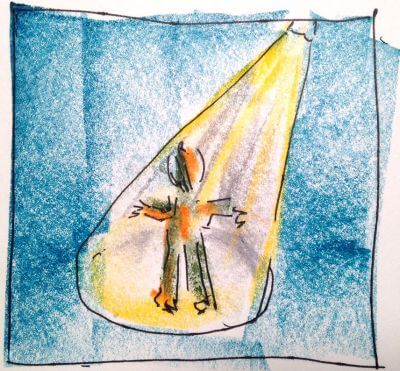
 When you speak to people, what determines whether your message will be received willingly or unwillingly? Whether your information is considered credible? Do we trust you as a spokesperson? If you listen, you absorb a myriad of different pieces of information, before he understands the content of the language. The sound of the voice already unfolds its unconscious effect in those long two tenths of a second that the brain needs to inquire about the meaning of the word in the "internal language lexicon".
What makes a good speaking voice?
From your perspective as a speaker you will appreciate it if:
- the voice lasts until the last word without losing power
- even after a long period of use and several presentations in the evening, you never get the feeling that you don't feel like talking anymore because your voice is tired
Above all, their listeners want that:
- Your voice sounds clear, intelligible and easily audible and asserts itself against all noises in the room or in the environment
- Listening is experienced as entertaining
- they are moved
- you feel personally addressed
You can lay a good foundation for all these requirements if you use the following, simple preparation exercises of the professional presenters (time required: 3 minutes, make sure that you are undisturbed):
1. Activate your gesture room
Nur zehn Sekunden genügen: Strecken Sie Ihre Hände und Arme zur Seite, nutzen Sie in bedächtigen großen Bewegungen Ihren gesamten Bewegungsradius der Arme. Bewegen Sie sich langsam, wie in Zeitlupe. Lassen Sie langsam Ihre Bewegungen immer größer und ausladender werden. Genießen Sie das Gefühl der Befreiung und die Weite des Raums. Achten Sie ganz besonders auf die Beweglichkeit Ihrer Ellbogen: Der sogenannte “Ellbogenradius” bestimmt, wie flüssig und authentisch Ihre Gesten wirken. Liegen beim Sprechen die Oberarme eng am Körper an, signalisiert das Schutzbedürfnis. Gleichzeitig klingt Ihre Stimme weniger bewegt und moduliert. Wenn die Schultern hingegen loslassen und die Gesten an Raum gewinnen, entfaltet sich der Klang Ihrer Stimme, Sie klingen deutlich unmittelbarer und lebendiger.
2. Silent diaphragmatic gymnastics
Move the left knee towards the right shoulder and vice versa 10 times without effort. It is enough to indicate the movement. Stay round in the back and do not stretch the knees all the way through – this will cause a twist-screw movement of the lumbar spine. Again, you move emphatically slowly, enjoying every movement. Important: Explicitly feel the muscles in the lower back. The exercise activates your diaphragm and thus your voice power center in your lower back.
3. Activate the diaphragm by "Flight of the Bumblebee"
Einfach, aber effektiv: Lassen Sie akustisch eine dicke Hummel von ihrem Rastplatz auffliegen und eine kurze Ehrenrunde drehen: “Wwwwww!”. Werden Sie dabei lauter und leiser, stellen Sie sich vor, wie die Hummel ihre Kreise zieht. Noch einfacher und spaßvoller wird die Übung, wenn Sie Ihren Zeigefinger für einen kurzen Moment zur Hummel werden lassen und ihm stimmlich mit dem “Wwwww!” folgen.
Have fun with the exercises. By the way: What are your own most important criteria for a good speaking voice?

Reading tip: "Secret Seducer Voice. Voice as a success factor. 77 Answers to the Unconscious Power in Communication" by Arno Fischbacher, Soft Skills Kompakt, Junfermann Verlag, Paderborn. 3rd edition. Order here on Amazon

Dear Arno
just great, your comments, your tips, I finally took a look again. I always feel very belonging, but still not an active member. I should finally do it, right?
So, see you soon!!
heartily
Sabine
Hello Sabine,
thank you for your nice feedback! And as for stimme.at – the doors are wide open for you!
Greetings from Salzburg,
Arno